


International Conference "Museums Beyond the Beaten Track. Challenges from the Periphery, Communities and Local Heritage"
MUSEUM 2026
- URL: https://eventos.urjc.es/go/museosalmargen
- Event Date: 2026-04-22 ~ 2026-04-24
- Abstract Submission Date: 2026-03-18
- Submission Date: 2026-04-22
- Organizer: Universidad Rey Juan Carlos
- Location: Madrid, Spain
Ethnic & Cultural Studies Humanities, Literature & Arts (General) Visual Arts History
Throughout its consolidation as an academic discipline, museum studies have tended to gravitate around large national and international museums, their emblematic collections, and the management models they have established as the norm. These spaces, mostly located in urban centers and supported by solid structures of funding, research, and public outreach, have shaped a “canon” that influences not only academic agendas but also collective perceptions of what a museum is (and what it should be).
However, beyond this centralized focus lies a vast and heterogeneous museum universe that has historically remained on the margins of scientific discourse and cultural policies. Small archaeological, ecclesiastical, communal, and local museums, ethnographic and anthropological museums, and medium-sized collections, often located in peripheral or rural areas, constitute the largest segment of the museum landscape today. Far from being residual spaces, these museums hold a heritage deeply linked to the communities that sustain them and to the social, cultural, and symbolic environments from which they emerge.
The relative “marginality” of these institutions is not only geographical or budgetary, but also epistemological. Their practices, challenges, and potential have been scarcely examined by academia, despite directly addressing central issues for the contemporary museum: sustainability, community participation, intergenerational transmission of heritage, management of limited resources, professionalization in precarious contexts, and the redefinition of its social function in the 21st century. In these spaces, the museum presents itself as an active agent of cultural mediation, living memory, and identity construction that transcends the vision of a mere monumental object container
The international conference Museums Beyond the Beaten Track. Challenges from the Periphery, Communities and Local Heritage, organized by students and teachers from Master's Degree in Museums Curation at the Universidad Rey Juan Carlos, is born by the will to shift the gaze and open a space for critical discussion on these these often-overlooked museums. It is proposed as an interdisciplinary and intergenerational meeting forum where researchers, professionals and cultural agents can share experiences, methodologies and theoretical frameworks that allow reconsidering the role of museums from the edges.
The International Conference Museums Beyond the Beaten Track. Challenges from the Periphery, Communities and Local Heritage welcomes proposals for on-site oral presentations in Spanish and English that may fall within one of the following thematic areas:
1. Management and funding strategies in peripheral museums.
Proposals focused on specific management models of museums located outside major cultural centers, considering legislative frameworks, public and private funding formulas, working conditions, and institutional sustainability. Critical reflections on structural precariousness and center-periphery asymmetries in resource allocation are particularly welcome.
2. Community participation, education, and cultural action.
Contributions analyzing the role of peripheral museums as educational and cultural agents, in dialogue with local communities, educational institutions, and associations. This includes mediation experiences, educational programs, temporary exhibitions, and participatory projects that position the public as an active actor in museum planning and local cultural action.
3. Territorial outreach, sustainability, and rural environments.
Studies on strategies through which museums extend their impact beyond their physical headquarters, contributing to the cultural, social, and economic development of rural environments. Special attention will be given to sustainable initiatives, territorial networks, and cultural policies addressing imbalances between urban centers and peripheries.
4. Collection preservation, digitization, and technological integration.
Contributions devoted to preventive conservation, documentation, and digitization of collections in small and medium-sized museums, as well as the incorporation of technological resources, digital platforms, virtual or augmented reality, and web developments. Legal, technical, and economic challenges that shape innovation in peripheral contexts will be considered.
5. Local tangible and intangible heritage and its management.
Proposals highlighting the diversity of local heritage in rural and peripheral contexts, including oral traditions, agricultural practices, craft techniques, and intangible expressions. Analyses of their management, intergenerational transmission, heritagization processes, risks of disappearance, and the museum’s role as cultural mediator are especially welcome.
6. Case studies, ongoing projects, and best practices.
Presentations of concrete experiences, ongoing projects, and best practices promoted by peripheral museums, individually or in networks. This includes applied research, new curatorial dynamics, temporary exhibitions, as well as academic work (doctoral theses, TFM, and TFG) related to these museum realities.
Researchers interested in participating with an on-site oral presentation (Madrid) at the International Conference Museums Beyond the Beaten Track. Challenges from the Periphery, Communities and Local Heritage must submit their abstract through this digital application before March 18, 2026. Any questions or inquiries will be addressed via email at congreso.museos@urjc.es.
Event Promotion

|
|
The 13th International Conference on Quantum Dots (QD 2026) |
| 2026-05-17 ~ 2026-05-22 |
|
|
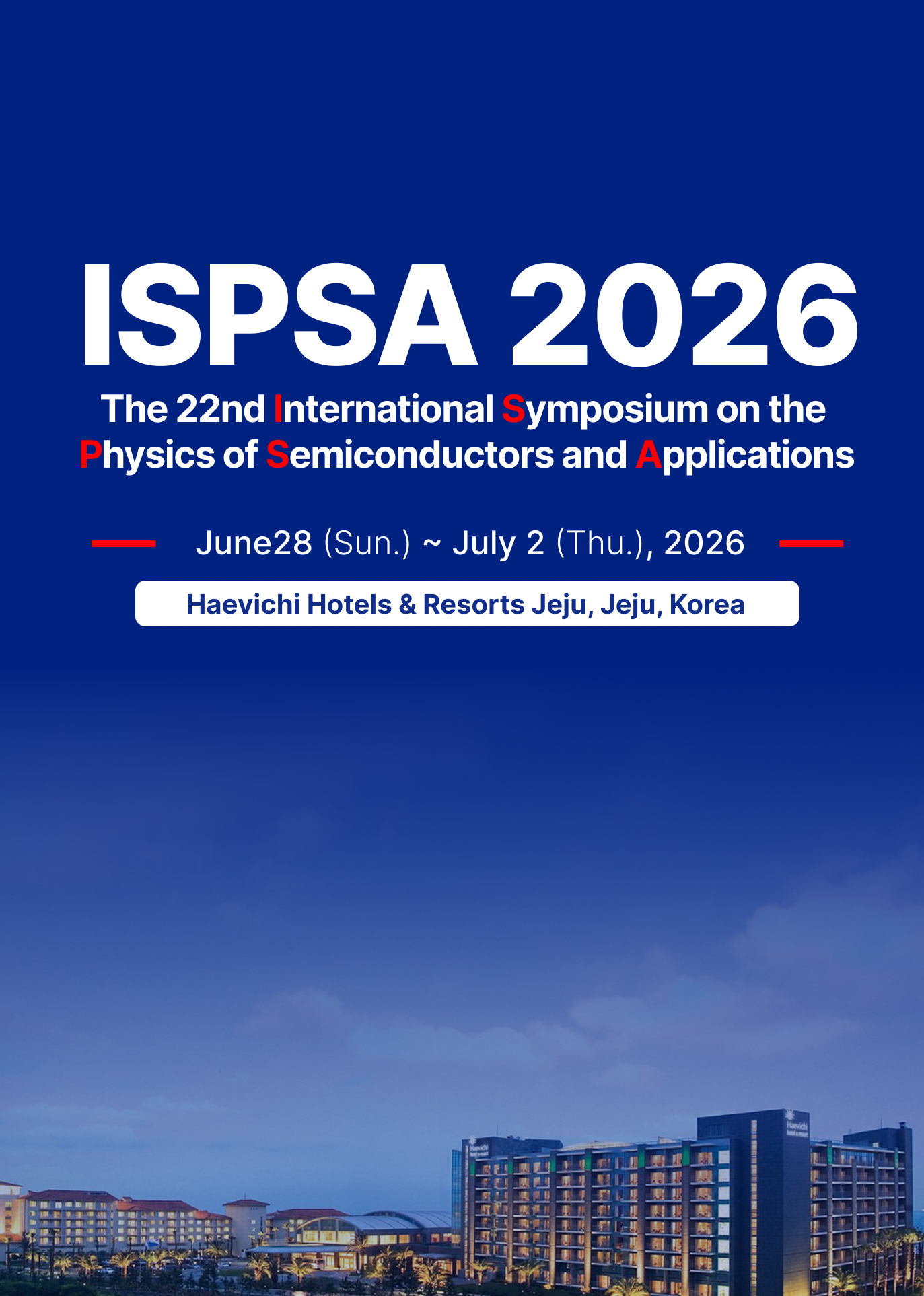
The 22nd International Symposium on the Physics of Semiconductors and Applications (ISPSA 2026) |
| 2026-06-28 ~ 2026-07-02 |

|
|
The 15th Asia-Pacific Conference on Transportation and the Environment (APTE 2026) |
| 2026-07-08 ~ 2026-07-10 |







MANUSCRIPTLINK © 2015 -
